I have been selling stone since 2007. And the single question I still get almost every week, from first-timers and people who have already been to three other showrooms, is some version of the same thing:
“Wait. Is quartzite the same as quartz?”
It is not a dumb question. The names are nearly identical, the internet treats them like they are interchangeable, and a lot of people in this industry are not great at explaining the difference without making you feel bad for asking. So here it is, plainly, from someone who handles both of these materials in a real stone yard every single day.
Why This Confusion Keeps Happening
The names are where it starts. Quartzite sounds like quartz with extra letters. They both get used as countertop materials. They can even look similar in a photo. But they are fundamentally different products that behave very differently in a real kitchen, and choosing the wrong one is the kind of mistake you will see every morning for the next twenty years.
What Is Quartzite?
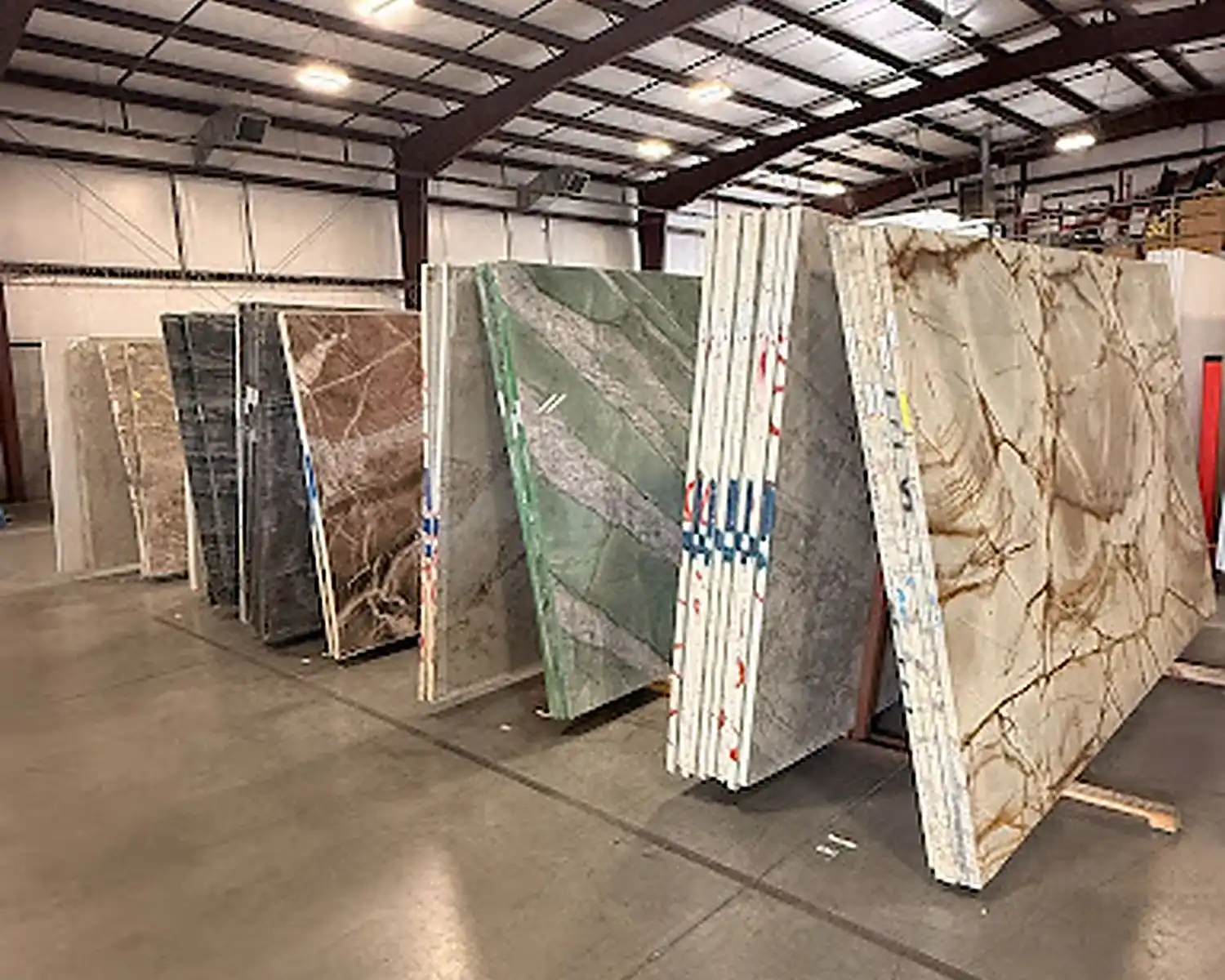
Quartzite is natural stone. It starts as sandstone, then heat and pressure deep underground transform it over millions of years into one of the hardest, most durable natural stones you can put in a home. It comes out of the earth, gets slabbed, gets polished, and ends up on a slab yard floor like ours.
Because it formed in the ground, no two quartzite slabs are the same. The veining, the movement, and the color in a piece of Taj Mahal or Sea Pearl came from geological forces over millions of years, not from a factory running the same formula on repeat. That depth and character are exactly why people fall hard for quartzite, and why it photographs the way it does.
It does ask something of you in return, though. More on that below.
What Is Engineered Quartz?
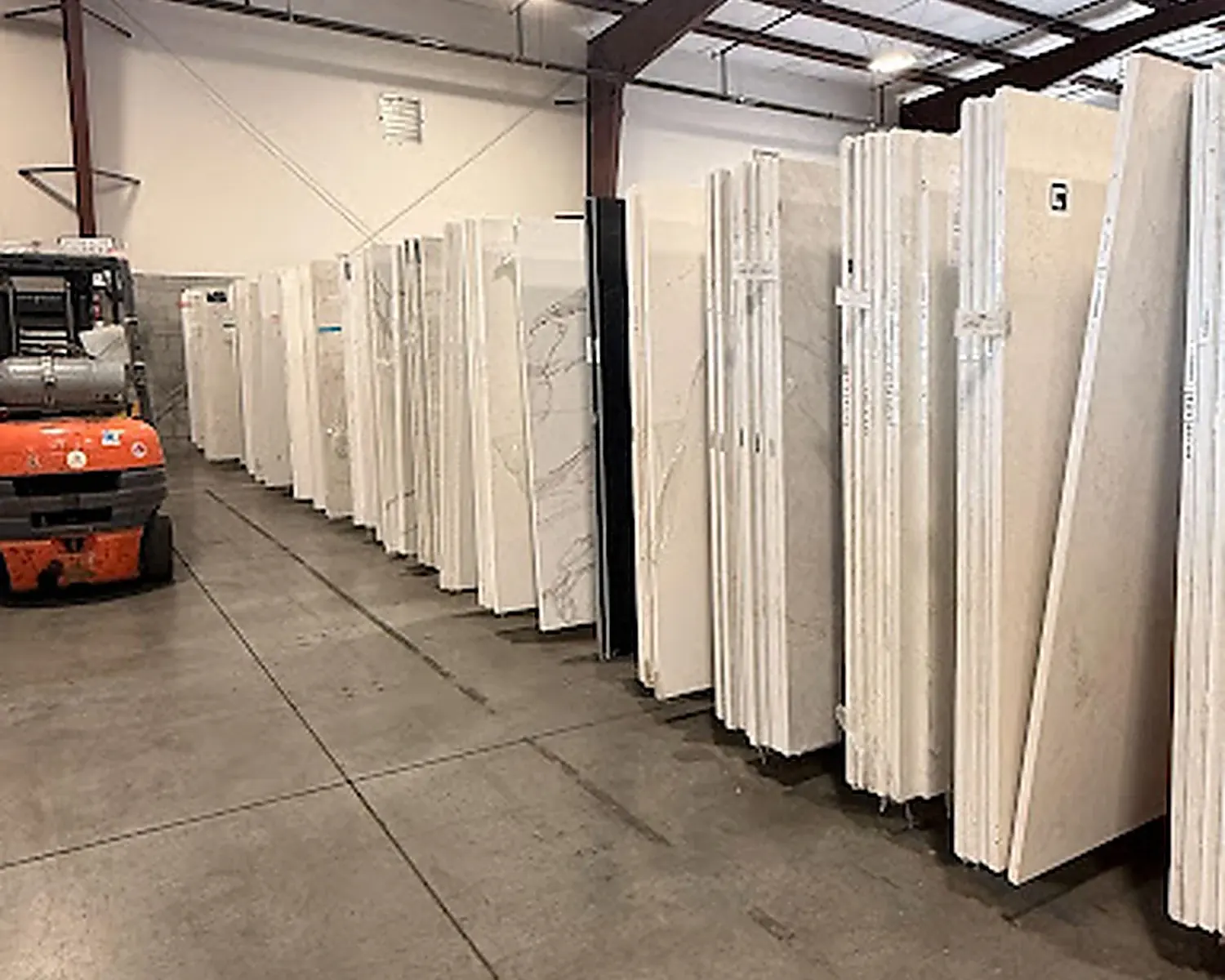
Engineered quartz is a manufactured product. It is made from crushed quartz mineral, typically 90 to 95 percent, mixed with resin and pigment, then pressed into slabs under controlled factory conditions.
The consistency that process produces is a genuine feature, not a compromise. If you are working with a large kitchen that needs color continuity across a long run, or if you want to know exactly how your countertop will look before it is ever installed, engineered quartz can deliver that in a way natural stone simply cannot. Every slab comes out looking like the last one.
What you give up is depth, character, and the knowledge that your countertop is the only one in the world that looks exactly like that. There are also a few performance differences that do not get talked about honestly enough in this industry.
How These Two Materials Actually Perform in a Real Kitchen
Here is how I would walk you through it if you were standing in the yard with me.
Heat Resistance
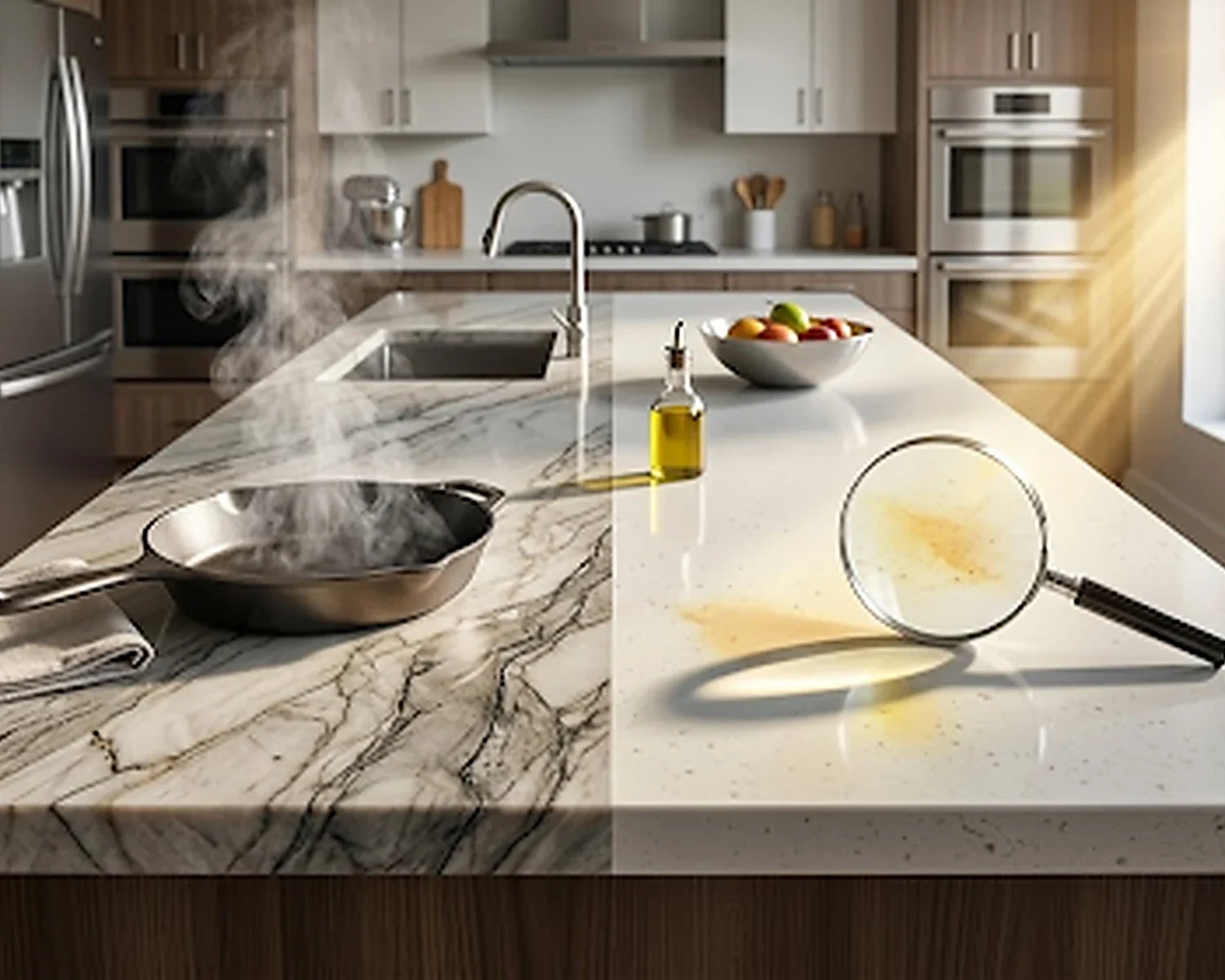
Quartzite handles heat well. Hot pans, cast iron, a baking sheet straight from the oven. It does not flinch. Engineered quartz contains resins, and resins do not love heat. Sustained direct heat can cause discoloration or surface damage. It is not fragile, but it has real limits that quartzite simply does not have.
Sun Exposure
This one surprises most people. Engineered quartz can yellow or discolor with prolonged UV exposure. If your kitchen gets strong direct afternoon sun through a large window or skylight, that is a real consideration before you choose a material. Quartzite does not have this problem.
Maintenance and Sealing
Quartzite is porous, which means it needs to be sealed. Not constantly, but periodically, and it is part of owning natural stone. Engineered quartz is non-porous and does not require sealing. If low maintenance is a hard requirement for you, that is an honest edge for engineered quartz.
Look and Feel
Real stone feels cool and substantial when you put your hand on it. Engineered quartz runs slightly warmer and can feel a little less dense depending on the product. It is subtle, but most people notice the difference immediately when they are standing in front of full-size slabs rather than a small sample tile.
Price
Both materials span a wide range. Exotic quartzites can carry a premium because they are rare and the market reflects that. Engineered quartz tends to have a more predictable cost ceiling. Neither is automatically cheaper. It depends entirely on what you are selecting.
So Which One Is Right for You?
That depends on what you are actually trying to solve for.
If you want a surface with real, unrepeatable character, something that could only exist because it formed inside the earth, quartzite is the answer. If your kitchen has a long run that needs color continuity, or if you have young kids and you genuinely do not want to think about sealing something periodically, engineered quartz might be the smarter call for your life.
Neither answer is wrong. They are just different, and the right one is the one that fits how you actually use your kitchen every day.
If you are still weighing material options, our guide on dolomite countertops is worth reading too. It covers another natural stone that a lot of people discover late in their research and wish they had found sooner. You can also see our full stone selection to get a feel for what we carry.
What We See in Our Own Yard (The Part Nobody Talks About)
I want to share something from our own experience, because I think you deserve to hear it before you make a final decision.
The stone repair tech we work with is one of the best in the business. He stays very busy. Right now he is booked out over a month, and when I asked him recently what was filling his calendar, he did not hesitate. Almost entirely quartz repair. Not from one manufacturer, not from one product line. Engineered stone across the board.
We see more repair calls and more callbacks on engineered quartz than on any natural stone we carry, and we carry a lot. I am not telling you this to talk you out of quartz. I am telling you this because if someone is walking you through a countertop decision and they are not being this straight with you, that is something worth noticing.
How to Actually Shop for Stone Without Getting It Wrong
Here is what I always tell people: do not make this decision from a sample tile.
Sample tiles are four inches by four inches. Your countertop is not. The depth, movement, and character of a natural stone slab, or even the way an engineered slab reads at full scale, does not show up in a small chip on a showroom card. You need to stand in front of the actual slab.
When you come in, bring your cabinet door or a paint chip if you have one. We will pull slabs, put them next to what you brought, and tell you what we actually think. Not what moves fastest. Not what has the better margin. What fits your project and your life.
Come in on a Saturday if that works better for you. No appointment needed, and there is no sales pressure waiting when you walk through the door. We have had customers come in four or five times over a few months before they decided, and we would do it again without question. It is your kitchen and you are going to look at it every morning for the next twenty years. Take the time you need to get it right.
We are at 5103 N Sawyer Ave in Garden City. Reach us at 208-376-7328 or at rbgsurfaces.com. Come see the stone in person. We will give you a straight answer.