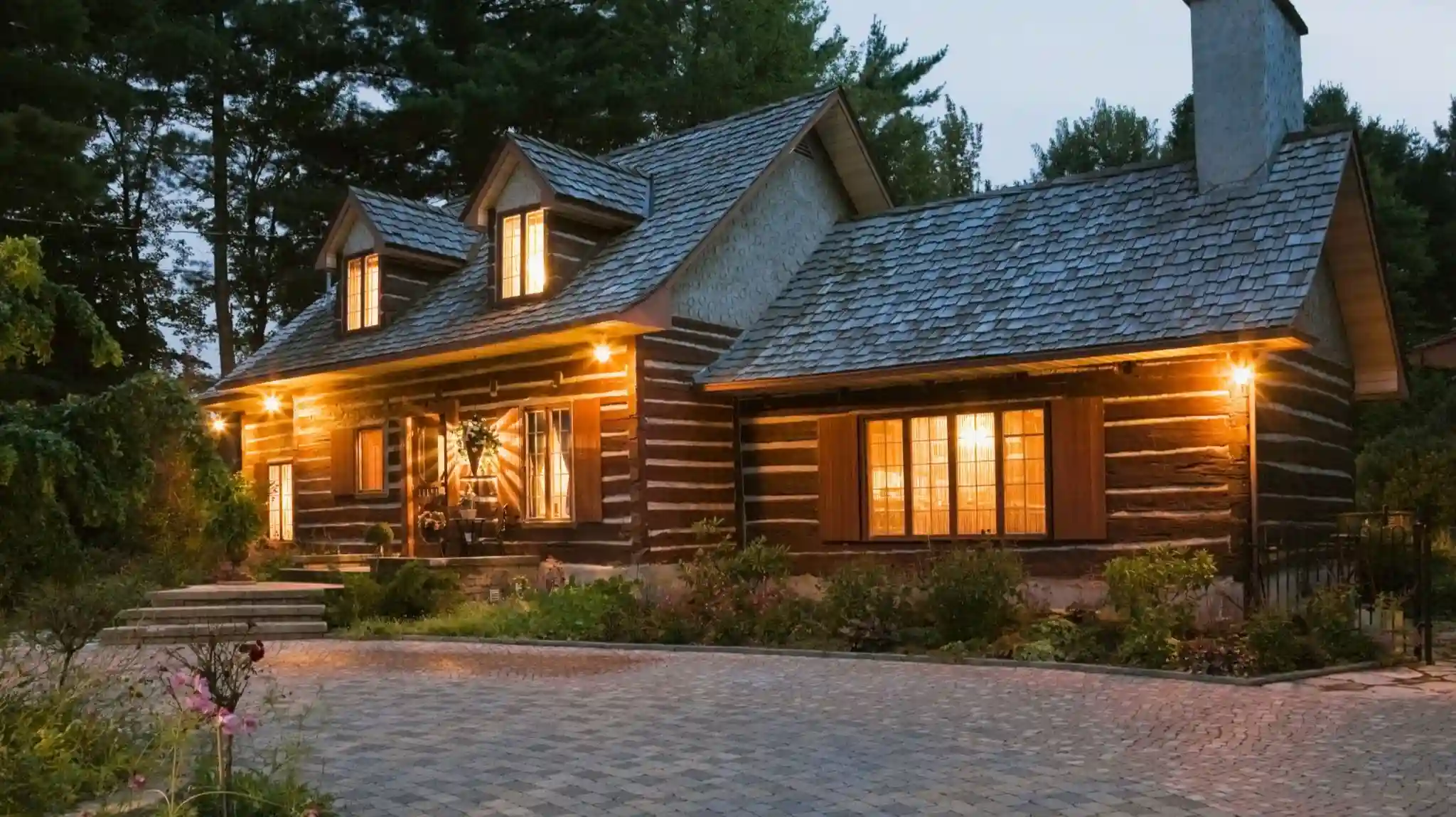
Choosing countertops for a cabin is a little different from choosing them for the kitchen you use every day. An Idaho cabin or vacation home may sit empty for stretches of time, see concentrated use on weekends and holidays, and go through a different routine than your primary residence.
That changes what “best” means. The best countertops for a cabin are not necessarily the most expensive or the hardest material available. They are the surfaces that fit how often you use the property, how much maintenance you want to do when you arrive, how you cook and entertain there, and how you want the cabin to feel.
If you are comparing granite, quartz, quartzite, porcelain, soapstone, marble, or dolomite, start with the way the property actually functions. Once you understand that, it becomes much easier to narrow the material list.
What Are the Best Countertops for a Cabin?
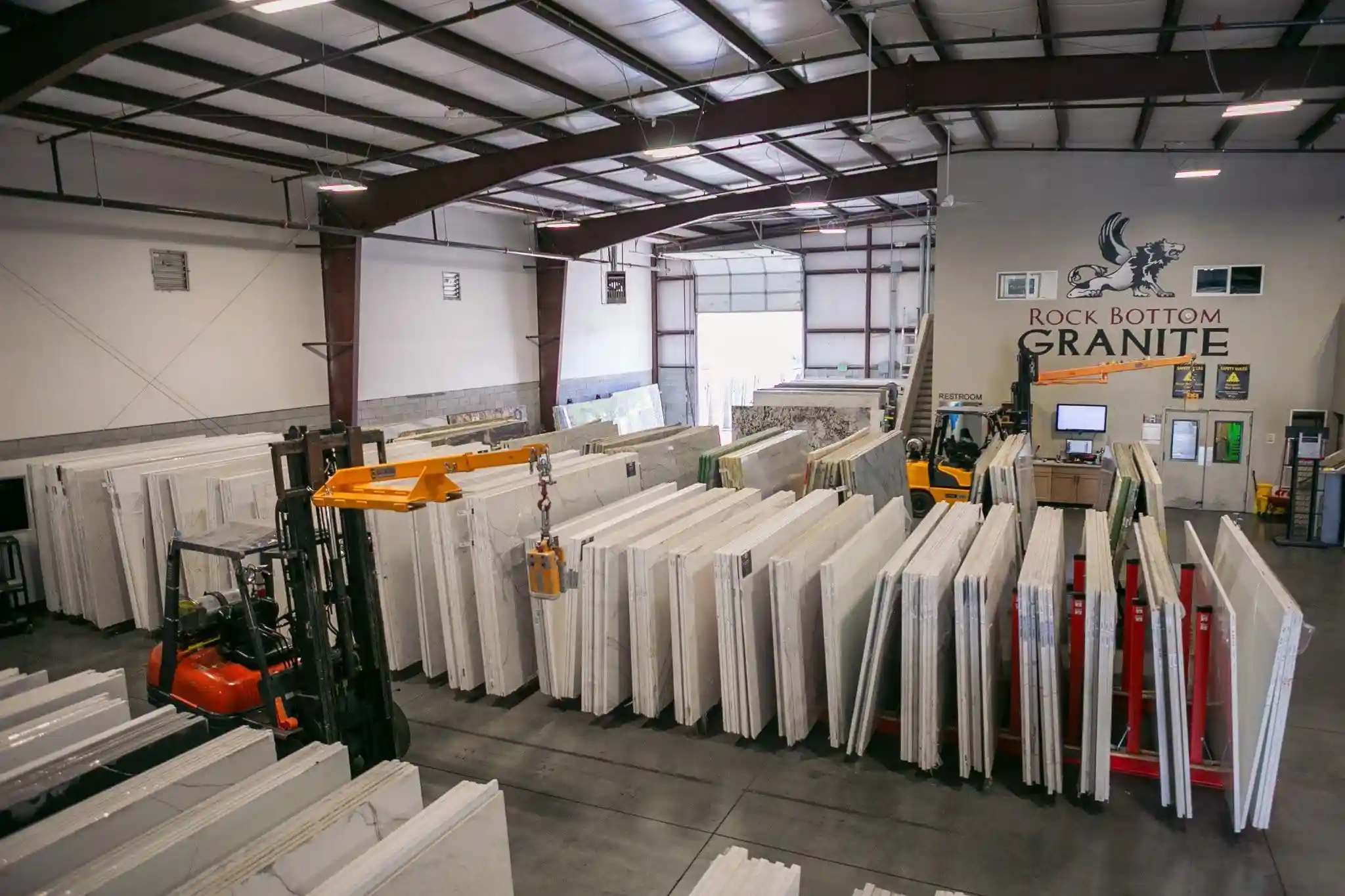
For many Idaho cabins, granite, quartz, quartzite, and sintered surfaces such as porcelain or Dekton are strong options, but for different reasons. Granite and quartzite appeal to homeowners who want natural stone and are comfortable with normal stone care, while quartz appeals to people who prioritize an easy-to-clean, non-porous indoor surface.
There is no universal winner because a cabin that hosts ten people every holiday weekend has different needs from a quiet second home used by two adults several times a year. The right choice comes from matching the material to the property rather than choosing from a generic countertop ranking.
| Material | Often Makes Sense When You Want | Main Consideration |
|---|---|---|
| Granite | Natural variation and a durable everyday surface | Most natural stone benefits from sealing |
| Quartz | Low-maintenance indoor use and consistent appearance | Protect it from high heat; not recommended for outdoor use |
| Quartzite | Natural-stone character with a harder surface | Natural variation and normal stone maintenance |
| Porcelain / Dekton | A highly engineered, low-maintenance surface | Fabrication and edge details matter |
| Soapstone | A softer, lived-in cabin character | Scratches and patina are part of the material |
| Marble / Dolomite | A particular natural-stone look you strongly prefer | Choose with realistic expectations about care and wear |
The more useful question is therefore not, “What is the best countertop?” It is, “Which countertop fits the way we use this cabin?”
What Makes a Cabin Countertop Decision Different?
A primary kitchen develops a predictable routine. You know how often you cook, what gets left on the counter, how quickly spills are cleaned, and how much maintenance bothers you.
A second home can be much less predictable. One weekend the kitchen barely gets used, while Thanksgiving or a family reunion might have several people cooking, serving food, opening bottles, making coffee, and setting hot cookware around the room.
There are several practical questions worth answering before you fall in love with a particular slab.
How long does the cabin sit empty?
If you are away for several weeks or months at a time, you may value a countertop that requires very little attention when you return. That does not automatically rule out natural stone, but it does make maintenance expectations more important.
Think about whether you want to arrive and immediately start enjoying the property or whether occasional stone care feels perfectly reasonable to you. There is no wrong answer, but there can be a wrong material for your expectations.
Does the home experience major temperature changes?
Some Idaho second homes are kept at a relatively consistent indoor temperature year-round, while others are winterized or kept much cooler when nobody is there. Those are meaningfully different conditions.
If the property will remain unheated for long periods or experience unusual interior temperature swings, tell your countertop supplier and fabricator before choosing the material. Installation conditions, cabinetry, seams, adhesives, and manufacturer requirements can matter, so this is a situation where property-specific advice is more useful than a blanket statement that one countertop is “freeze-proof.”
What happens when everyone arrives?
Cabins often experience concentrated use rather than steady use. A kitchen that sits quiet Monday through Thursday might suddenly be feeding eight people on Friday night.
Think about the real abuse the surface will receive. Hot cookware, drink spills, kids making snacks, coolers being unpacked, large breakfasts, and repeated cleanup can matter more than the number of days per year the property is occupied.
How much maintenance do you actually want?
This question is easy to underestimate. A homeowner might happily maintain a natural-stone kitchen at home but feel differently when maintenance takes time away from boating, hiking, skiing, fishing, or relaxing at the cabin.
Choose for the version of yourself who is actually going to use the property. If you already know that you want the second home to be as hands-off as possible, give that preference real weight.
1. Granite: A Strong All-Around Choice for Many Idaho Cabins
Granite deserves serious consideration for a cabin because it combines the character of natural stone with the kind of everyday functionality many second-home owners are looking for. Each slab is naturally different, which also works well in properties where wood, metal, stone, and other organic materials are already part of the design.
The important distinction is that granite is natural stone. No two slabs are exactly alike, and most natural stones benefit from sealing, so “granite” should not be treated as one uniform product with one identical appearance and maintenance profile.
Granite may be a good fit if:
-
You want a natural material rather than an engineered pattern.
-
Weekend cooking and entertaining will be common.
-
You are comfortable with normal natural-stone maintenance.
-
You want to select the actual slab instead of choosing from a small sample.
-
Variation in movement, mineral deposits, and color is part of what appeals to you.
For a second home, seeing the actual slab becomes especially useful. A small sample cannot show you how the pattern will move across a long island or how dramatically one portion of a natural slab differs from another.
2. Quartz: A Practical Choice When Low Maintenance Comes First
Quartz is often high on the list for homeowners researching low-maintenance countertops for a cabin. Unlike granite or quartzite, quartz is engineered from natural quartz combined with resins and pigments, creating a more consistent appearance and a non-porous surface.
That consistency can be useful when you want the countertop decision to be straightforward. You can choose a controlled color and pattern without needing to account for as much slab-to-slab variation as you would with natural stone.
Quartz still has limitations worth understanding. RBG recommends using trivets rather than placing hot pans directly on quartz because sustained high heat can affect the resin binders, and quartz is not recommended for outdoor applications because prolonged exposure can lead to fading and warping.
Quartz may be a good fit if:
-
Minimal routine maintenance is one of your highest priorities.
-
You prefer a more predictable pattern.
-
The countertops will be inside the cabin.
-
You do not mind using trivets and following normal heat precautions.
-
You want a broad design range without relying on the variation of natural stone.
For owners who mainly want to unlock the cabin door, put groceries away, and start the weekend, quartz can make a compelling case. It is not automatically the right choice, but its maintenance profile is worth comparing carefully against natural stone.
3. Quartzite: For Owners Who Want Natural Stone With More Visual Movement
Quartzite frequently enters the conversation when someone loves the movement and individuality of natural stone but is comparing options beyond granite. It is a natural stone, not engineered quartz, despite the similar names.
That distinction is important because quartz and quartzite should not be evaluated as interchangeable materials. Quartzite gives you the variation of a natural slab, which means the specific piece you select matters.
For an Idaho vacation home, quartzite can make sense when the countertop is intended to become an important part of the room rather than simply a neutral background. Large islands are particularly good examples, because a full-size slab can contain movement and features that never appear on a small showroom sample.
Quartzite may be a good fit if:
-
Natural stone is important to you.
-
You want more movement or variation in the countertop.
-
You are comfortable treating it as natural stone rather than expecting quartz-style uniformity.
-
You are willing to understand the care requirements of the specific stone you select.
If quartzite is on your shortlist, compare actual slabs rather than making the decision from photographs alone. With natural stone, the slab you buy is the countertop you will live with.
4. Porcelain and Dekton: Worth Considering for a Low-Maintenance Second Home
Sintered surfaces such as porcelain and Dekton give cabin owners another path besides traditional natural stone and engineered quartz. They are especially worth researching when low maintenance is high on your list but you do not necessarily want quartz.
These materials have their own fabrication requirements and design considerations, so the conversation should go beyond simply comparing surface durability. Edge profiles, thickness, layout, and the experience of the fabricator can all influence the finished result.
For that reason, porcelain or Dekton should usually be evaluated as a complete countertop system rather than solely by reading a list of material specifications. Ask to see full-size material and discuss the planned kitchen layout before making the decision.
5. Soapstone: A Different Approach to the Cabin Look
Soapstone appeals to a different kind of cabin owner. Instead of trying to keep a countertop looking exactly as it did on installation day, some homeowners like a surface that develops more character as it is used.
That means it is important to understand the material before choosing it. If changes in appearance, small marks, and a developing patina would bother you, another surface may be a better match.
If those characteristics sound appealing rather than problematic, soapstone can fit particularly well with wood cabinetry, darker finishes, traditional cabin interiors, and spaces designed to feel established rather than pristine. The key is knowing in advance that its character is part of the decision, not something to discover afterward.
What About Marble or Dolomite in a Cabin?
Marble and dolomite should not automatically be crossed off the list simply because a property is a second home. They should, however, be chosen because you specifically want what that material offers and understand what living with it involves.
This is where internet countertop advice often becomes too simplistic. A material can be completely appropriate for one homeowner and frustrating for another because tolerance for maintenance, wear, patina, and change is personal.
For an L-shaped cabin kitchen used twice a month by two adults, those tradeoffs may feel completely reasonable. For a vacation rental or family gathering place where many different people use the kitchen, the same owner may decide she would rather choose a surface that requires less thought.
Natural Stone or Engineered Surface: Which Is Better for a Second Home?
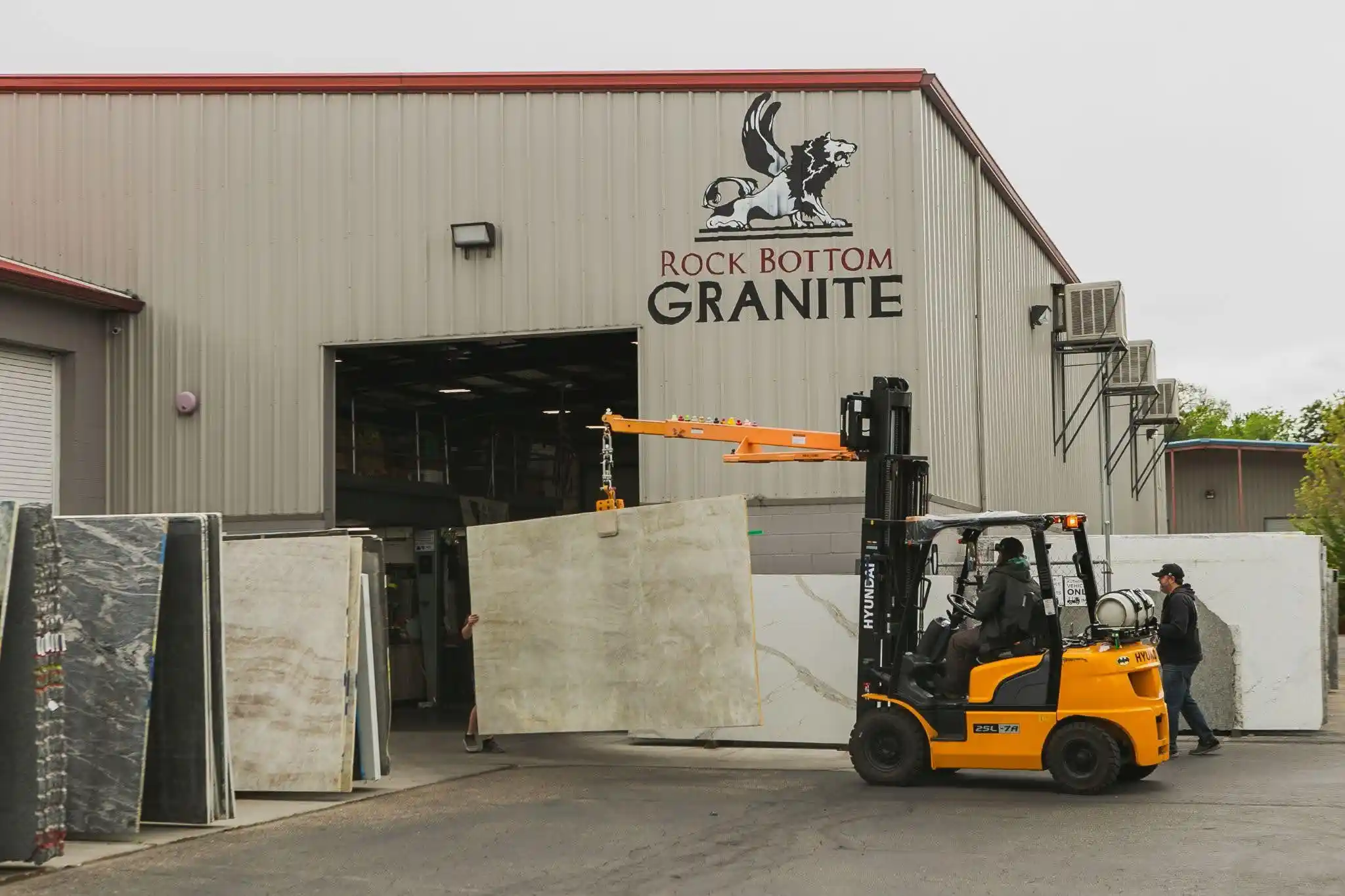
Start with how much predictability you want.
Natural stone such as granite, quartzite, marble, dolomite, and soapstone gives you variation that cannot be perfectly reproduced. If you want the countertop to have individual movement, mineral features, and differences from one slab to another, that uniqueness is part of the appeal.
Engineered quartz gives you more consistency and a non-porous surface with lower routine maintenance. Sintered options such as porcelain and Dekton provide another manufactured alternative worth comparing when your priorities lean toward performance and controlled appearance.
Neither category automatically wins. A homeowner who values one-of-a-kind natural material may happily accept some maintenance, while another may consider lower upkeep the entire reason for choosing a manufactured surface.
A Better Way to Choose Cabin Countertops
Instead of starting with material names, write down how the cabin will actually be used. This prevents you from choosing a surface based entirely on a photograph and then trying to make your lifestyle fit the material afterward.
Ask yourself:
-
Will the property be occupied every week, seasonally, or only a few times a year?
-
Will the cabin remain heated when nobody is there?
-
Is this mainly a quiet couple’s retreat or a gathering place for family and friends?
-
How much cooking usually happens during a visit?
-
Will children or guests use the kitchen without thinking much about countertop care?
-
Do you want essentially no routine countertop maintenance?
-
Are you comfortable sealing natural stone when appropriate?
-
Do you like surfaces that develop character, or do you want the appearance to remain highly consistent?
-
Is the countertop mostly indoors, or are you also planning an outdoor kitchen?
-
Is seeing unique movement in a full natural-stone slab important to you?
Your answers will usually eliminate several materials quickly. That is more useful than reading ten more articles telling you that every countertop material is simultaneously “durable,” “stylish,” and “a great choice.”
How to Narrow the Decision Before Visiting a Showroom
You do not need to know exactly what you want before seeing countertops in person. For this stage of the decision, getting down to two or three material categories is enough.
For example, you might reach one of these conclusions:
“We want the cabin to be easy to manage, and consistency matters more than having a unique natural slab.” Start by comparing quartz with porcelain or other sintered surfaces.
“We definitely want real stone, but we need something suited to an actively used family kitchen.” Start with granite and quartzite, then compare the specific slabs and maintenance expectations.
“The character of the material matters more to us than keeping everything looking untouched.” Add soapstone, marble, or dolomite to the conversation and make sure you understand how each surface changes with use.
That is enough progress for one research session. You do not need to solve every fabrication detail, choose an edge profile, select a sink, and request a final estimate before you understand which material family actually belongs in the cabin.
See the Materials Side by Side Before You Decide
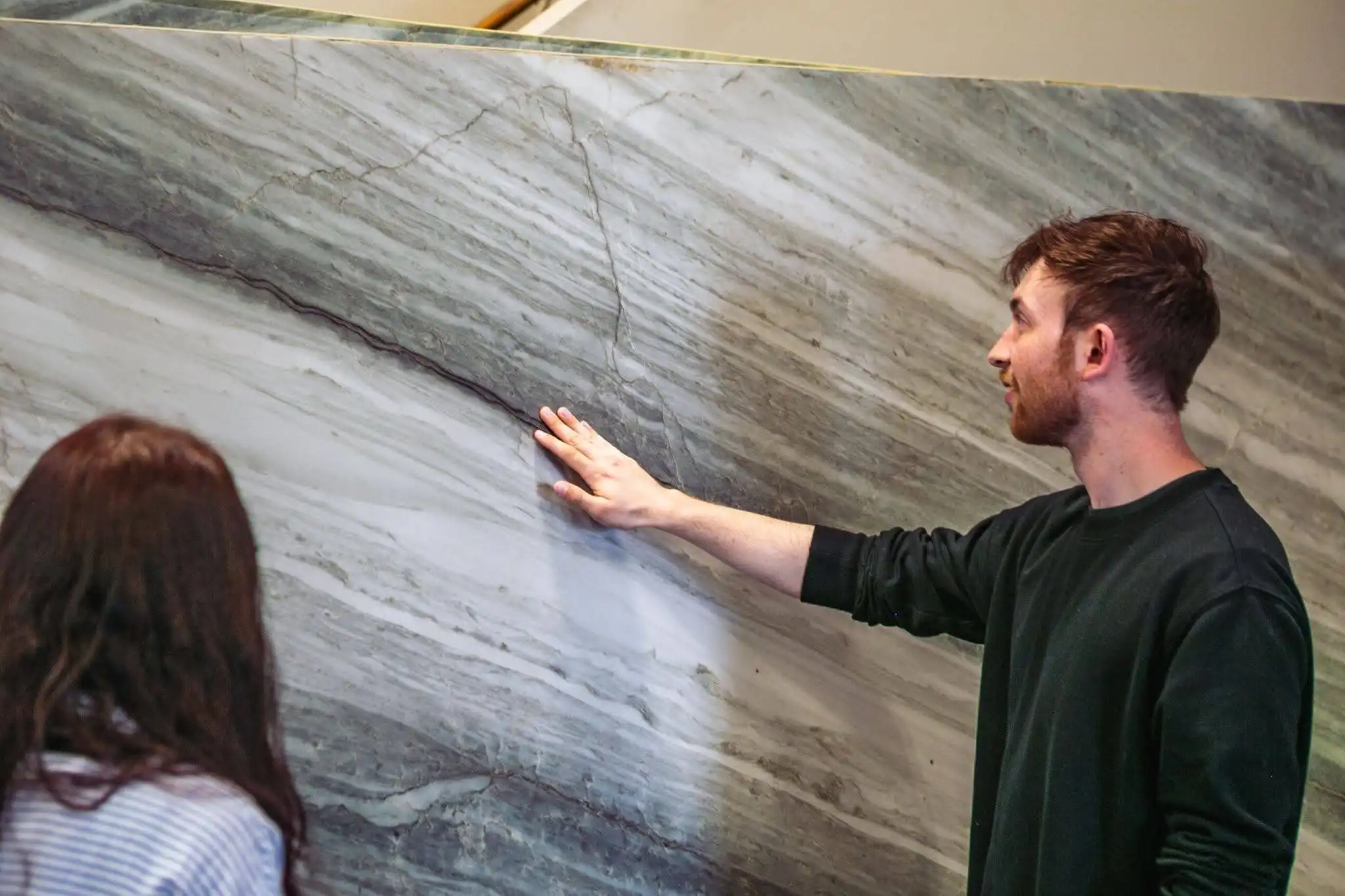
Once you have narrowed the list, the next useful step is seeing the materials at full scale. Granite, quartzite, dolomite, marble, soapstone, quartz, porcelain, and Dekton can feel very different when you are standing in front of a full slab rather than looking at a cropped photograph online.
RBG Surfaces in Garden City carries natural and engineered countertop materials and allows walk-ins without an appointment. Bring cabinet doors, flooring, paint colors, backsplash samples, or even photos of the cabin, and explain how often the property is occupied and what level of maintenance you are comfortable with.
You do not need to arrive knowing exactly which countertop you want. At this stage, the goal is simpler: compare the materials you have shortlisted, see the actual slabs, ask questions about the differences, and leave with more confidence than you had when you walked in.
Choosing the Right Countertop for Your Cabin
The best countertops for a cabin are the ones that make sense after the novelty of the remodel has worn off and you are simply using the property. Think about vacancy, concentrated weekend use, cooking habits, maintenance tolerance, indoor conditions, guests, and how much material variation you actually want.
Then narrow the field rather than forcing yourself to pick immediately. If your priorities point toward low maintenance, compare quartz with sintered surfaces. If natural stone matters most, compare granite and quartzite first, then explore options such as soapstone, marble, or dolomite when their specific character fits what you want.
When you are down to two or three possibilities, seeing them beside one another will answer questions that another evening of online research probably will not. RBG Surfaces welcomes walk-ins at its Garden City showroom, so you can bring your cabin finishes, compare full-size materials, and learn what each option would realistically require before deciding.