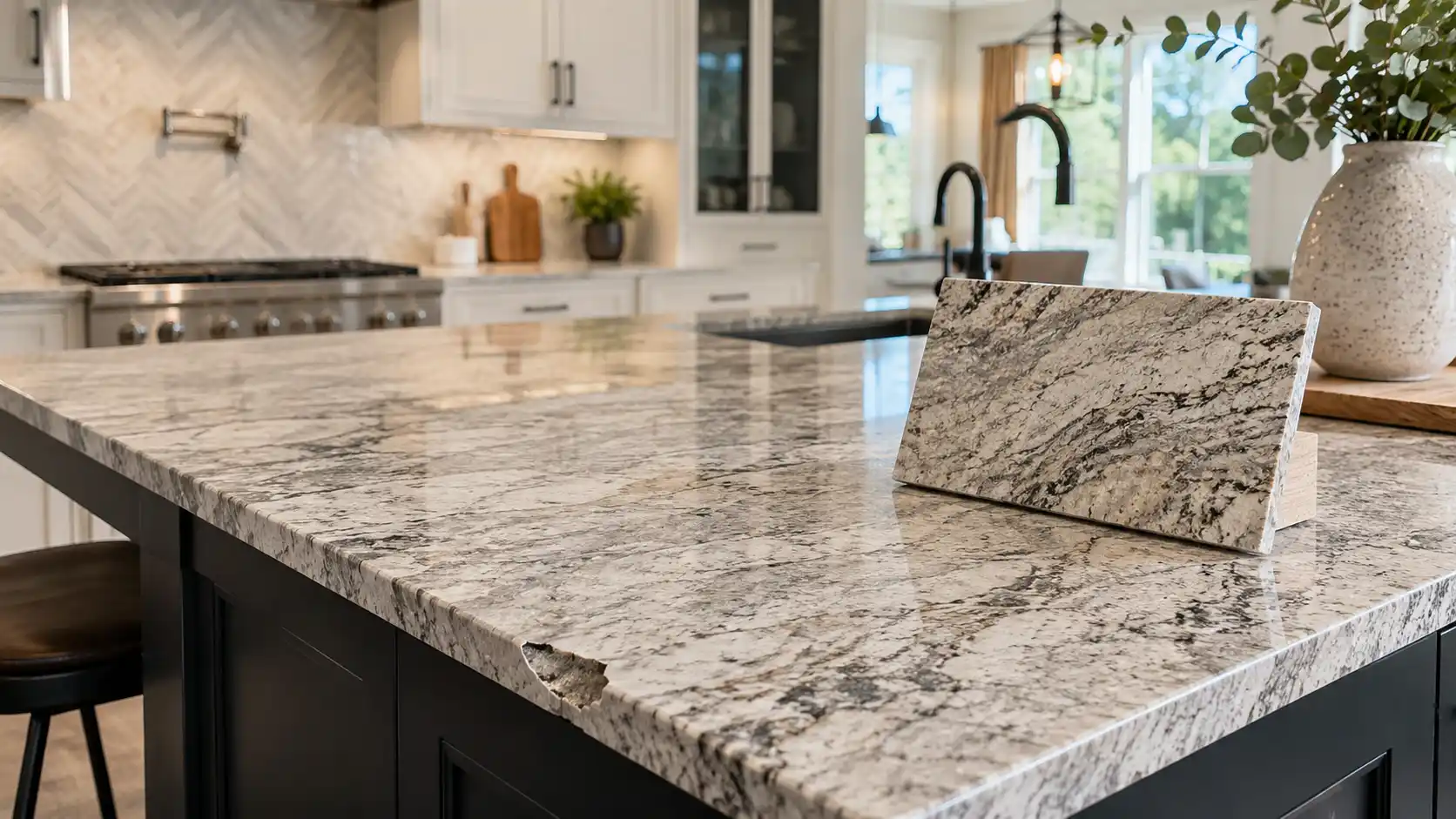
Damage to one section of a stone countertop creates a surprisingly difficult decision. If most of the countertop still looks good, replacing everything can feel unnecessary. But if you replace only the damaged area, you may wonder whether the new stone will actually match what is already there.
If you are matching an existing granite countertop, the most important thing to understand is that finding stone with the same name does not guarantee an identical appearance. Natural stone varies from slab to slab, so the real question is not simply, “Can I find the same granite?” It is, “Can I find something close enough that I will be comfortable with the way the finished countertop looks?”
Sometimes the answer is yes. Sometimes a deliberate contrast looks better than an almost-match. And sometimes the amount or location of the damage makes starting fresh the more satisfying choice.
Before deciding, it helps to understand what you are actually trying to match.
Can You Match an Existing Granite Countertop?

You can sometimes find granite that coordinates closely with an existing countertop, but an exact natural-stone match may not be realistic. Two slabs sold under the same stone name can still have noticeable differences in background color, veining, mineral deposits, pattern density, and overall movement.
That variation is part of natural stone. No two natural-stone slabs are exactly alike, which is why matching existing granite should be approached as a visual comparison rather than simply a product-name search.
If your existing countertop has a soft gray background with sparse dark movement, for example, another slab with the same general name could have heavier movement or a slightly different overall tone. Both can legitimately be the same type of stone while looking different enough that you notice the transition.
The practical goal is often a compatible match, not a perfect duplicate.
Why the Location of the Damaged Section Matters
One of the most important questions is where the new material will meet the old material.
If two pieces of countertop will sit directly beside each other, even relatively small differences in background color or veining may be easier to see. Your eye naturally compares the two surfaces because they are sharing the same visual plane.
A replacement can be much more forgiving when the old and new stone appear on separate countertop runs or distinct areas of the room. The farther the materials are visually separated, the less your eye expects them to behave like one continuous piece.
Think about an island and perimeter countertops. They can be seen together, but they already read as separate surfaces. That gives you more freedom than trying to place a new piece directly beside an older piece and asking the two to appear identical.
This is why the answer to “Will this granite match?” depends partly on where the match has to happen.
Start by Deciding How Much Variation You Can Live With
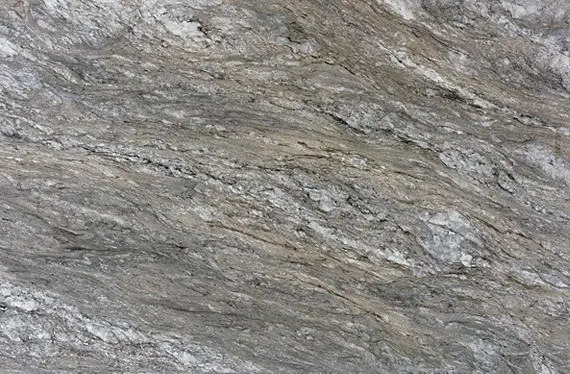
Before hunting for replacement stone, ask yourself a more useful question:
If the new section is slightly different, will that bother me every time I walk into the room?
There is no universally correct answer. Some homeowners are comfortable with normal stone variation and will barely notice a slightly different section once everything is installed. Others know immediately that a visible change in tone or movement will become the first thing they see every morning.
Neither reaction is unreasonable. The mistake is assuming you will be fine with a difference before you have actually seen what that difference looks like.
This matters especially when damage has created pressure to make a decision quickly. You may want the countertop fixed as soon as possible, but that does not mean you have to make a permanent design decision without thinking through the result.
Option 1: Find the Closest Possible Match
A close match can make sense when the damaged area is limited and you still genuinely like the countertop you already have.
Instead of focusing only on finding the same stone name, compare the visual characteristics that matter in your actual kitchen. Look at the existing countertop’s overall background color, the direction and amount of movement, prominent veins or mineral features, and whether the pattern feels quiet or active.
Then compare those characteristics against the actual replacement material.
This is where looking at a full-size slab becomes much more useful than relying only on a small sample or online photograph. A small section may show the right color while leaving out the larger movement that becomes obvious across several feet of countertop.
If you find a slab that works with the existing surface and you are comfortable with some natural variation, partial replacement may let you solve the damage without replacing countertops that are otherwise doing their job.
Option 2: Make the Difference Intentional
There is another possibility that homeowners sometimes overlook: stop trying to make two different pieces look identical.
An intentional contrast can look more convincing than a replacement that almost matches.
Suppose the damaged countertop is on an island while the perimeter stone is still in good condition. Instead of searching indefinitely for granite that imitates the existing surface, you could consider a different material or pattern that coordinates with the room while clearly being a deliberate design choice.
The distinction matters. An imperfect match can make people wonder whether a section was replaced. A purposeful contrast reads as a design decision.
That does not mean every damaged countertop should suddenly become a two-material kitchen. It simply means that matching is not your only option, especially when the replacement area is already visually separated from the rest of the countertop.
Option 3: Start Fresh With a Larger Area
Sometimes replacing more of the countertop is the choice that makes the most sense, even when the original damage is relatively localized.
That does not automatically mean replacing every countertop in the room. It could mean replacing one complete run instead of one small piece, or replacing a larger connected area so the transition happens somewhere less noticeable.
Starting fresh becomes worth considering when you cannot find a match you are comfortable with, when new and existing material would meet in a highly visible location, or when you already know that a difference between the two would bother you.
It may also make sense if the damage has forced you to reconsider a countertop you were no longer completely happy with anyway.
The important point is that full replacement should be an option, not an automatic recommendation. If the rest of your countertop still works for your home and you find a compatible replacement, there is no reason to enlarge the project simply because matching takes some thought.
Don’t Judge a Match by the Stone Name Alone
This is one of the easiest mistakes to make when trying to find matching granite for existing countertops.
You may know the original stone name and assume that finding another slab carrying that name solves the problem. With natural materials such as granite, quartzite, marble, and dolomite, the name gives you a starting point, not a guarantee of duplication.
Natural stone is inherently variable. That means the actual slab matters.
Engineered quartz is different because its appearance is manufactured to be more consistent, and slabs from the same production batch can be particularly consistent. Even then, if you are replacing an existing countertop, it is worth comparing the available material rather than assuming the name alone answers the question.
For natural stone, visual comparison is especially important.
What Should You Compare Before Choosing Replacement Stone?
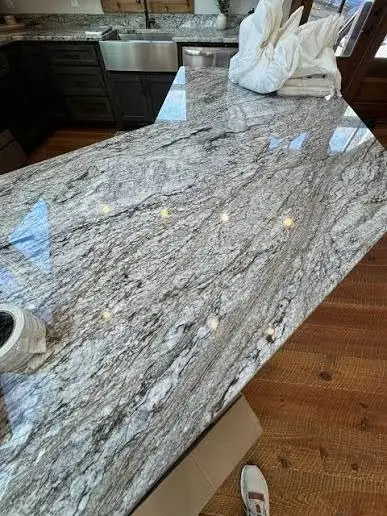
You do not need to become a stone expert to make a good comparison. You do need to look beyond whether two pieces are both “white granite” or have the same label.
Pay attention to a few major characteristics:
- **Background color:** Does one surface lean warmer, cooler, lighter, or darker?
- **Veining:** Are the veins similar in color, width, direction, and frequency?
- **Pattern density:** Is one slab relatively quiet while the other has much more activity?
- **Mineral deposits:** Are there distinctive spots or mineral features that change the overall appearance?
- **Movement:** Does the pattern flow across the slab in a similar way, or does one feel dramatically different?
- **Overall tone:** When you stop examining individual details, do the two materials simply feel like they belong together?
You are not necessarily trying to find two slabs that could fool a geologist. You are trying to decide whether they will look cohesive in your room.
Bring the Existing Kitchen Into the Comparison
Choosing replacement stone without context makes an already difficult decision harder.
Take clear photos of the existing countertop, including both close-ups and wider views that show how the surface relates to the cabinets, flooring, backsplash, and surrounding finishes. If you have any original samples or leftover material, bring those as well.
Cabinet, flooring, paint, and backsplash samples can also help. A slab does not exist by itself once it enters your home, and the surrounding colors may influence whether a close match or a deliberate contrast feels more appropriate.
The objective is not to make the decision complicated. It is to evaluate the replacement in the same context in which you will actually live with it.
Matching Granite vs. Matching Other Countertop Materials
The material you already have changes what “matching” means.
Granite
Granite is natural stone, so no two slabs are exactly alike. Matching existing granite countertops usually means looking for a slab with compatible color, movement, and pattern rather than expecting an identical duplicate.
Quartzite
Quartzite is also natural stone. As with granite, the actual slab should be evaluated because natural variation is expected.
Marble and Dolomite
These are natural materials as well, so veining, tone, and movement can differ from piece to piece. If the existing countertop has distinctive movement, comparing full-size material becomes especially useful.
Quartz
Quartz is engineered rather than quarried as a finished slab. Its appearance is generally more consistent, particularly within the same production batch, which can make matching more predictable than with natural stone.
Regardless of the material, seeing the actual replacement before fabrication is preferable to relying only on a name or small photograph.
A Simple Way to Decide: Match, Contrast, or Start Fresh?
If you are still going back and forth, use this three-question test.
1. Do I still like the countertop I already have?
If yes, trying to preserve most of it may be worthwhile. If the damage has simply accelerated a change you already wanted, starting fresh deserves more consideration.
2. Where will the old and new material meet?
A direct side-by-side transition usually demands a closer visual relationship. Separate countertop runs or a distinct island can give you more flexibility.
3. Would I rather see a slight mismatch or an intentional difference?
This question often clarifies the decision quickly. If an almost-match would bother you, either find a stronger match or make the difference intentional instead of forcing two materials to pretend they are identical.
The right choice is the one you will still feel comfortable with after the urgency of the damage is gone.
See the Actual Stone Before You Decide
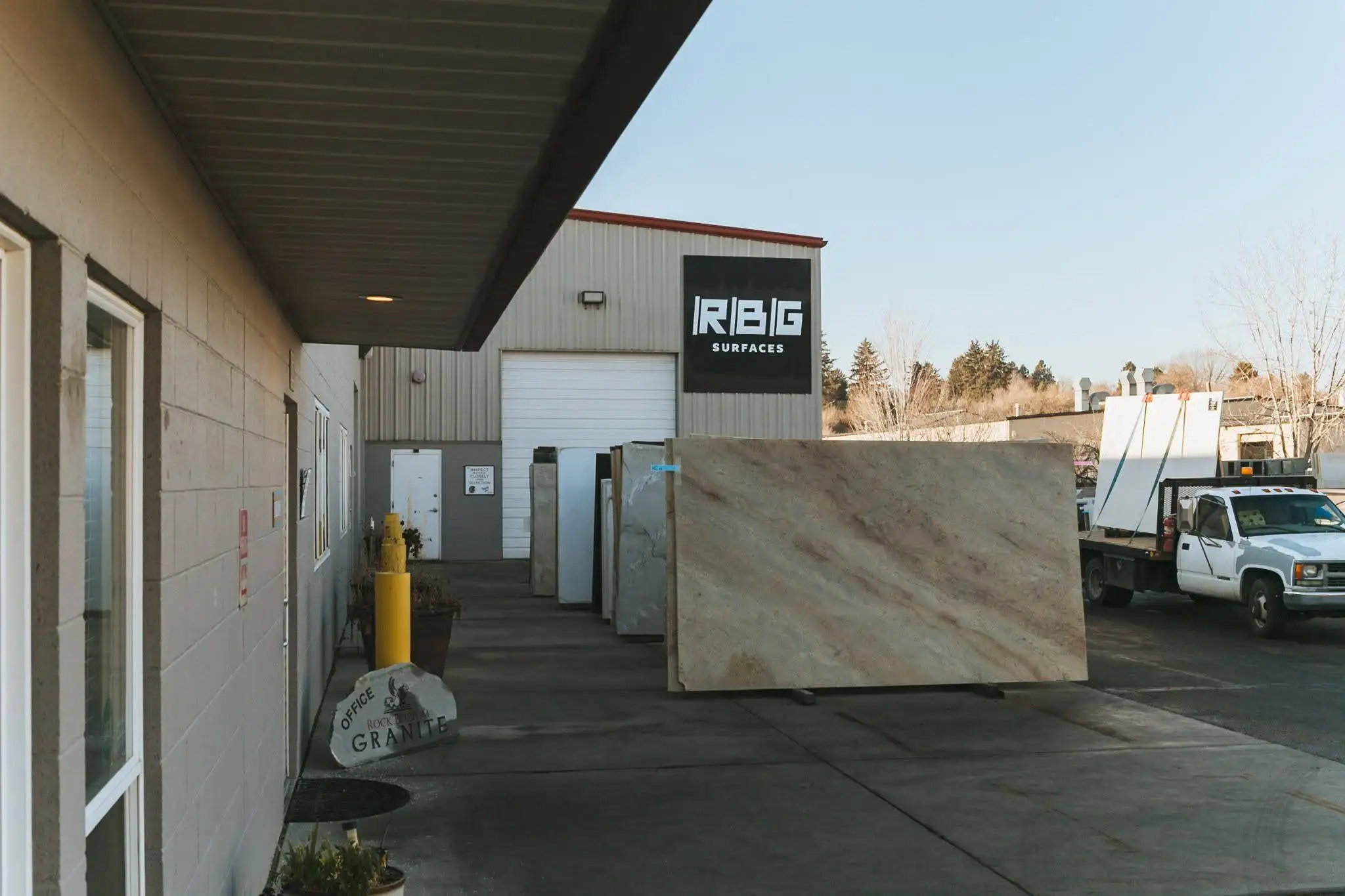
If you are trying to match an existing stone countertop in the Treasure Valley, photographs and stone names can help narrow the search, but seeing the actual material gives you much more information.
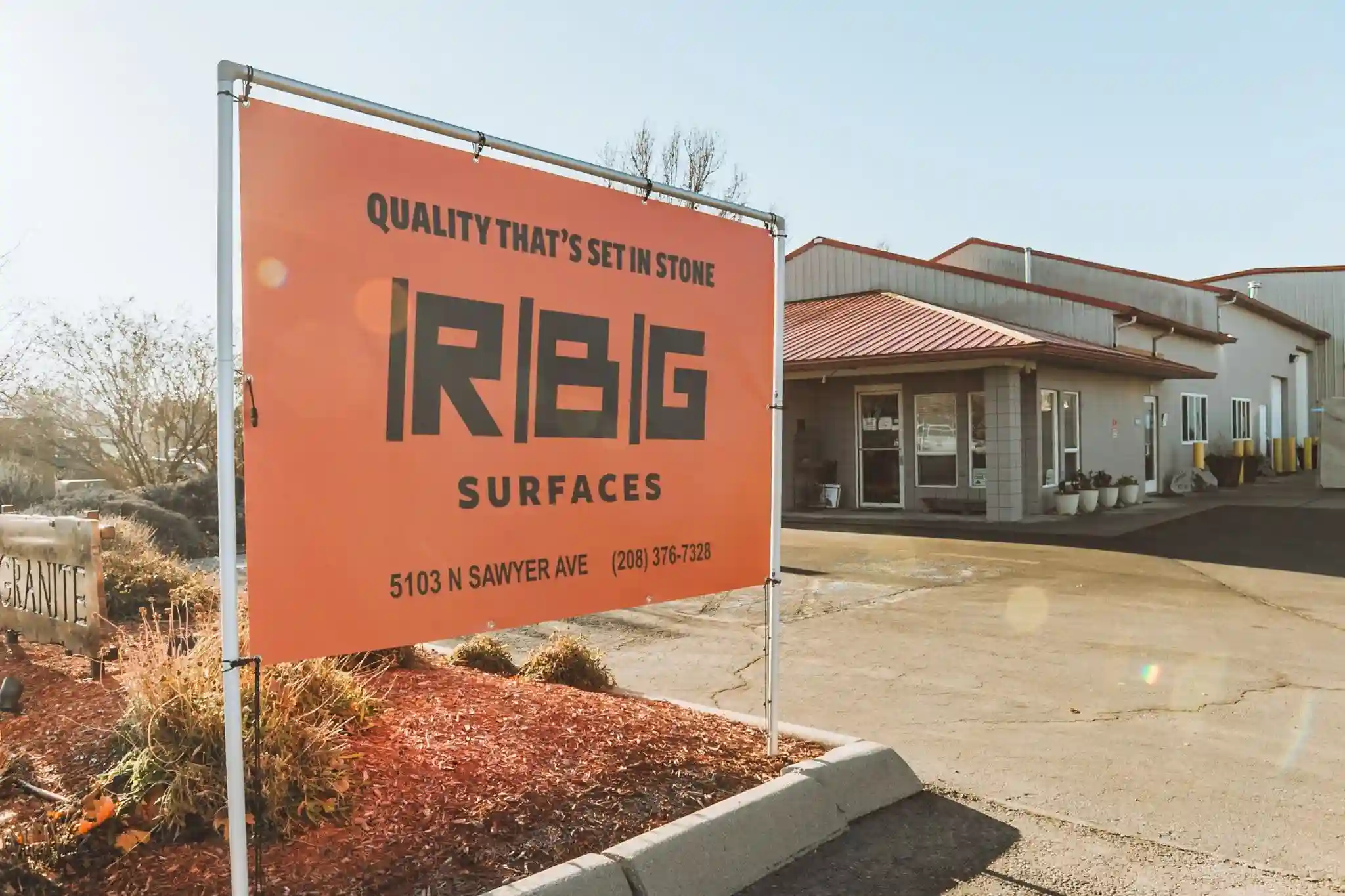
RBG Surfaces in Garden City carries natural stone including granite, quartzite, marble, dolomite, and soapstone, along with engineered quartz and other surface options. Inventory changes, so matching an existing stone countertop is best approached by comparing what is currently available rather than assuming a specific slab will always be in stock.
You do not need to arrive already knowing whether matching, contrasting, or starting fresh is the right answer. Bring photos of your existing countertop and any cabinet, flooring, paint, or backsplash samples you have, and compare the possibilities in person.
RBG Surfaces welcomes walk-ins, so the first step can simply be looking at the options and getting a clearer idea of what is realistically possible. If you eventually need fabrication and installation, RBG can also connect you with trusted local fabricators, since RBG supplies the stone rather than cutting or installing countertops in-house.
The Best Match Is the One You Will Be Comfortable Seeing Every Day
Damage may have forced you to think about your countertops sooner than you expected, but it does not have to force you into a rushed decision.
Start by separating the repair problem from the design decision. Find out what can realistically be matched, look at where the new material would meet the old, and decide how much natural variation you are comfortable seeing.
You may discover that a close match works just fine. You may realize that a contrasting island looks more intentional. Or you may decide that starting fresh gives you the cohesive result you actually want.
If you are not sure yet, that is a reasonable place to be. Bring photos and samples to RBG Surfaces in Garden City and look at full-size material before deciding. You do not have to know the answer before you walk through the door - seeing the options in person may be what finally makes the answer clear.