When you are looking at a full natural stone slab, your eye usually goes somewhere first. It may be a dramatic vein, a bold mineral formation, a concentrated area of color, or one section where the movement feels especially balanced.
That area matters. In natural stone slab layout, the question is not only, “Do I love this slab?” It is also, “Where should the part I love most actually go once this stone becomes my countertop?”
This is especially important with granite, quartzite, marble, dolomite, and other natural stones that have strong movement. A full slab can look incredible as one large piece, but fabrication divides that stone into individual countertop sections, island pieces, backsplash panels, vanities, or other surfaces.
That means the feature you loved in the slab yard should be discussed before cutting begins. With a little planning, the strongest part of the slab can land somewhere intentional instead of disappearing behind an appliance, getting interrupted by a sink cutout, or ending up in a quieter corner of the room.
Where Should the Best Part of the Slab Go?
The best part of a natural stone slab should usually go where it will be seen most often and interrupted the least. In many kitchens, that means the island, a long uninterrupted countertop run, a waterfall edge, a full-height backsplash, or another surface that naturally becomes the visual center of the room.
That does not mean the boldest section always belongs in the most obvious spot. Sometimes a dramatic vein is perfect for the island, while other times it may feel too busy there and work better on a perimeter counter or backsplash. The right answer depends on the stone, the room layout, the lighting, the cutouts, and what you personally love about the slab.
Why Natural Stone Slab Layout Matters Before Fabrication
Natural stone is different from engineered surfaces because every slab has its own pattern, movement, and personality. Even two slabs with the same material name can look different because the stone was formed naturally, not printed in a controlled pattern.
That uniqueness is one of the reasons people choose natural stone in the first place. It also means the layout deserves more attention than simply selecting a color and handing it off for fabrication.
A quiet granite with subtle speckling may not require much focal-point planning. A quartzite with sweeping veins, a dolomite with soft marble-like movement, or a marble with dramatic directional lines may need a more thoughtful countertop slab layout.
The more movement a slab has, the more important placement becomes. When a strong feature is cut apart without a plan, the finished countertop may not feel like the slab you remember choosing.
Start by Looking at the Slab From a Distance
Before studying the details up close, step back and look at the full slab from several feet away. This helps you see the overall movement instead of getting distracted by small mineral details.
Ask yourself where your eye lands first. That first visual pull is often the slab’s natural focal area, and it may be the part you want to preserve, highlight, or place in the most visible part of the room.
Then look at the slab again and notice whether the movement has direction. Some stones feel like they move left to right, top to bottom, diagonally, or in sweeping waves across the surface.
Directional movement matters because countertops are not viewed like wall art. A vein that feels balanced on a vertical slab may feel different when it runs across an island, turns a corner, or continues into a backsplash.
Decide What You Actually Love About the Slab

Before anyone talks about cuts, seams, or placement, name what you love most. This sounds simple, but it helps everyone involved understand what should be protected if possible.
You might love one bold vein that crosses the slab. You might love a concentrated pocket of gold, gray, cream, charcoal, blue, or rust-colored minerals. You might love the quieter edge because it feels calm and works better with your cabinets.
There is no objectively “best” part of a slab. The focal area is the section that matters most to you and makes the most sense for the room.
This is where many homeowners get stuck because they assume the most dramatic part is automatically the best part. In reality, the best part is the section that supports the finished design and still feels livable every day.
Think About the Most Visible Surfaces First
Once you know what part of the slab you care about, think about where people will actually see the countertop. The island is often the first candidate because it is open, central, and usually less interrupted than perimeter counters.
A long perimeter run can also be a strong focal area, especially if it sits under open shelving, near a range, or along the main sightline into the kitchen. A bathroom vanity, bar top, or laundry counter may also deserve focal-point attention if the stone is the main design feature in that space.
The goal is not to force every dramatic feature into the center of the room. The goal is to make sure the natural stone countertop layout matches how the room will be experienced.
For example, if the island is where everyone gathers, a strong vein across the island may be worth prioritizing. If the main view is from the living room into the kitchen perimeter, the best focal area may belong along that back run instead.
Watch for Sinks, Cooktops, and Other Cutouts
Cutouts can interrupt some of the best parts of a stone slab. A sink, cooktop, faucet hole, or appliance opening may remove or break up a section of veining that looked important on the full slab.
That does not mean dramatic movement can never go near a sink or cooktop. It means you should ask what will happen to that feature once the cutout is made.
A vein that passes behind a sink may still look great. A mineral formation that gets mostly removed by a cooktop may be better saved for another section if the slab size and layout allow it.
This is one of the most useful questions a homeowner can ask before fabrication: “What happens to this part of the stone after the cutout?” That one question can prevent a lot of disappointment later.
Consider Seams Before You Fall in Love With One Continuous Line
Many natural stone countertop projects require seams. The number and placement of seams depend on the slab size, countertop dimensions, access into the home, structural support, and the fabricator’s technical requirements.
If your slab has strong directional veining, seams become part of the visual conversation. A vein may continue beautifully across a seam, or it may need to stop and restart in a way that still feels balanced.
This is where expectations matter. Natural stone is not wallpaper, and the goal is not always perfect pattern matching. The goal is a layout that respects both the stone and the practical requirements of fabrication.
Before deciding on a focal area, ask where seams may be needed and how they could affect the movement. That helps you understand whether the feature you love can stay intact or whether the layout needs to shift.
Decide Whether the Island Should Be the Hero
For many kitchens, the island is the most natural place for the strongest slab movement. It is usually the most visible surface, it often has fewer wall interruptions, and it can show a large section of stone at once.
That said, not every slab should be centered around the island. If the island is small, crowded with seating, or filled with a large sink, the strongest feature may not have enough space to breathe.
A dramatic quartzite or marble-look stone may look incredible on a wide island with clean edges and simple surrounding finishes. The same movement may feel too busy on a small island with pendant lights, barstools, cabinet hardware, and a lot happening nearby.
The question is not, “Should dramatic veining always go on the island?” The better question is, “Will the island give this part of the slab enough uninterrupted space to look intentional?”
Use Quieter Areas on Purpose
A quieter section of the slab is not a bad section. In many layouts, the calmer areas are what make the focal area work.
If every surface is equally active, the eye has nowhere to rest. A quieter perimeter counter can make a dramatic island feel more deliberate, while a calmer vanity backsplash can keep a bold countertop from overwhelming a small bathroom.
This is especially helpful when you love a slab but worry it might feel too busy. Instead of dismissing it, look at whether the busier and quieter areas can be placed strategically.
Good natural stone slab layout is often about contrast. The focal area draws attention, while the supporting areas give the room balance.
Look at the Slab With Your Room in Mind
A slab does not exist by itself once it is installed. It will sit beside cabinets, flooring, backsplash, paint colors, lighting, appliances, and hardware.
Bring samples if you have them. Cabinet doors, flooring pieces, tile samples, paint cards, and hardware finishes can help you understand which part of the slab works best with the rest of the room.
A section with warm gold movement may look right at home next to creamy cabinets and warm wood floors. A cooler gray or charcoal section may work better with painted cabinetry, stainless appliances, or a more modern palette.
This is also why small samples can only tell part of the story. They can help with general color direction, but they cannot show where the strongest movement falls across the full slab.
Ask These Questions Before Fabrication

You do not need to become a fabricator to have a useful layout conversation. You only need enough vocabulary to explain what matters to you before the stone is cut.
Here are practical questions to ask when reviewing a countertop slab layout:
- Which part of this slab will be most visible in the finished room?
- Can the strongest movement land on the island or main countertop run?
- What part of the slab will be affected by the sink or cooktop cutout?
- Where will seams likely be needed, and how will they affect the veining?
- Are there quieter areas that should be used on perimeter counters?
- Does the movement have a direction that should align with the room?
- Can this feature be preserved, or does the layout need to work around technical limits?
- Which section will I see every day from the main entrance, dining area, or living space?
These questions help you participate without trying to control every technical detail. The fabricator still has to determine what can be safely and properly cut, transported, supported, and installed.
What the Fabricator Handles vs. What You Should Communicate
The fabricator handles the technical side of countertop layout, templating, cutting, seams, support, edge details, and installation. Their job includes making sure the stone can be fabricated and installed correctly.
Your job is to communicate what you care about visually. If one vein, mineral pocket, or quiet section is the reason you chose the slab, say that clearly before the layout is finalized.
This matters because technical layout and aesthetic preference are related, but they are not the same thing. A layout can be technically correct and still miss the part of the stone that mattered most to you.
RBG Surfaces is a stone supplier, not an in-house fabricator or installer. You choose your stone through RBG, and the fabrication, templating, cutting, and installation are handled by trusted local fabricators in the Treasure Valley.
Can Every Focal Area Be Preserved?
Not always. Slab size, countertop dimensions, cutouts, seams, access, support, and material characteristics can all affect what is possible.
That is why the best approach is not to demand one exact layout no matter what. The better approach is to identify priorities early, understand the constraints, and work with the fabricator to preserve the most important features where possible.
Sometimes the focal area can land exactly where you hoped. Other times, the layout needs to shift so the finished countertop works structurally, practically, and visually.
Knowing that ahead of time helps you stay flexible without feeling blindsided. It also helps you separate what is possible from what is simply preferable.
Common Mistakes When Choosing a Slab Focal Area
One common mistake is falling in love with a close-up detail before looking at the whole slab. A small mineral formation may be interesting up close, but the overall movement may be what matters more once the stone is installed.
Another mistake is assuming the boldest part should always go in the center. A strong vein can become the hero of the room, but it can also overpower a space if the rest of the design is already busy.
Homeowners may also forget about cutouts until late in the process. If the most distinctive section of the slab falls exactly where a sink or cooktop needs to go, that feature may be interrupted or removed.
The last mistake is not speaking up. If there is one part of the slab you love most, say so before fabrication decisions are finalized.
A Simple Way to Think About Slab Layout
Think of the slab in three zones: the hero area, the supporting areas, and the practical areas. This keeps the decision from feeling overwhelming.
The hero area is the part you want people to notice. The supporting areas are the calmer sections that help the room feel balanced. The practical areas are the sections that may work best around sinks, corners, seams, appliances, or less visible surfaces.
This does not replace the fabricator’s layout process. It simply gives you a clearer way to talk about the stone before the technical decisions are made.
When you can say, “This is the hero area, this part can be quieter, and this section matters less to me,” the conversation becomes much easier. You are no longer just reacting to a slab; you are thinking about how it will live in your home.
Why Seeing the Full Slab in Person Matters
Photos and small samples are helpful, but they cannot fully show scale, movement, or visual balance. A natural stone slab needs to be seen as a whole before you can understand where the focal area is.
When you see the actual slab in person, you can step back, compare sections, look at the direction of movement, and imagine how the stone might be divided into countertop pieces. You can also see details that may not appear clearly in a photo, such as subtle color shifts, mineral texture, or quieter areas near the edges.
This is especially important because natural stone inventory changes. If you are choosing granite, quartzite, marble, dolomite, or another natural material, the exact slab in front of you is the one that matters.
At RBG Surfaces in Garden City, you can walk through full-size slabs and look at the actual material before deciding. Bring cabinet, flooring, backsplash, or paint samples if you have them, because those pieces make it easier to understand which part of the slab belongs where.
Choose the Stone, Then Choose the Moment
Choosing a natural stone slab is not only about finding a material you like. It is about understanding which part of that slab you want to see every day.
The best focal area might belong on the island, along the main countertop run, on a backsplash, or in another visible part of the room. It might be the boldest vein, the softest movement, the most balanced section, or the area that works best with your cabinets and lighting.
Before fabrication, take time to identify what you love most about the slab. Then ask how sinks, seams, corners, and surface placement may affect that feature once the stone is cut.
If you are still learning how to read a slab, that is completely normal. Come see natural stone in person, bring your samples, and ask questions before you commit to a layout.
Before You Choose, See the Full Slab in Person
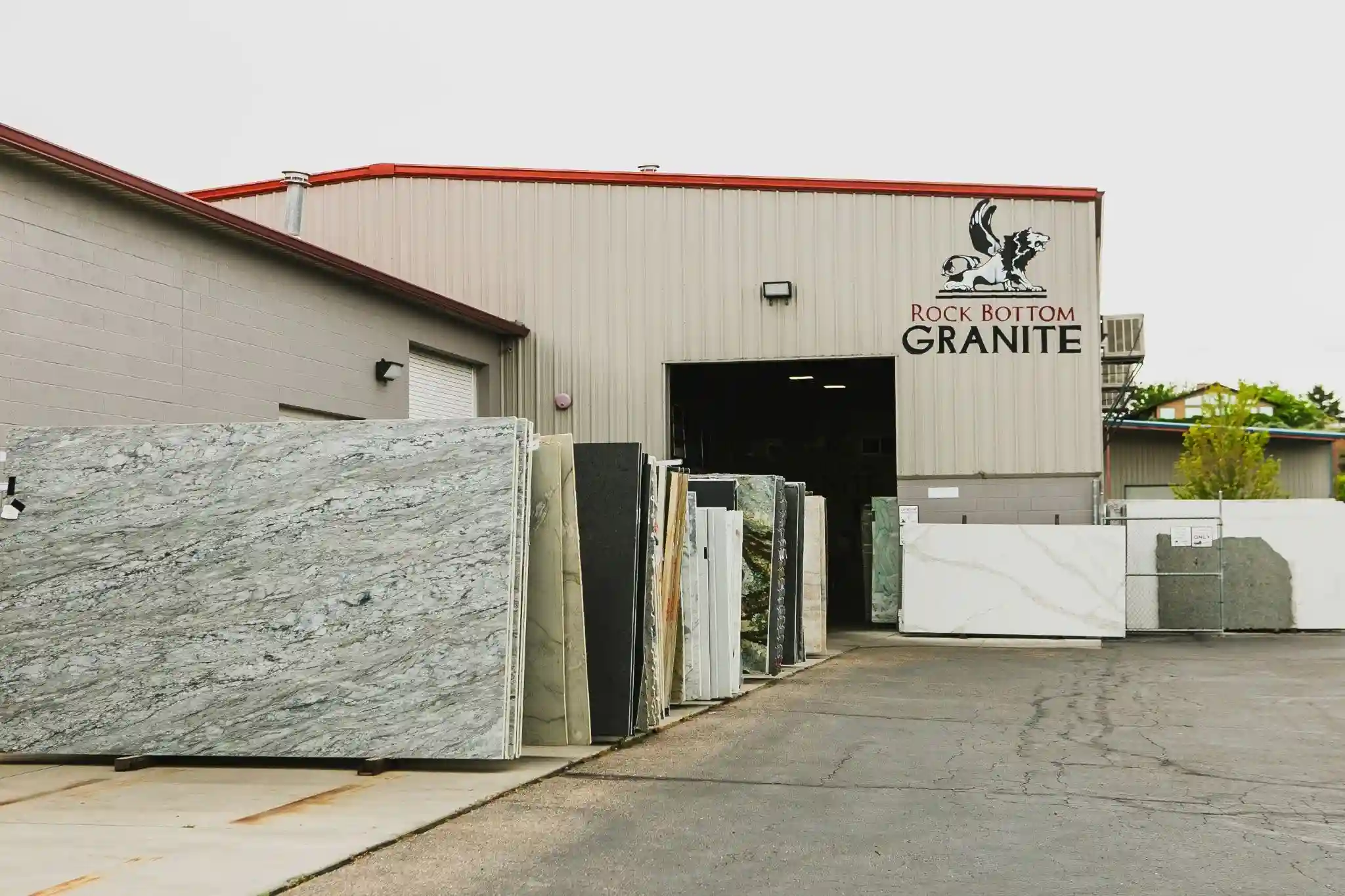
If you are choosing natural stone for a kitchen, bathroom, laundry room, bar, or another surface, start by seeing full slabs in person. Look for the area your eye goes to first, notice the quieter sections, and think about where each part would make the most sense in your room.
RBG Surfaces is located at 5103 N Sawyer Ave in Garden City, Idaho, and walk-ins are welcome Monday through Saturday. Bring your samples, ask questions, and take your time understanding the stone before the layout conversation begins.